


Do wooden cat trees attract dust?


As a supplier of wooden cat trees, I often encounter this question from customers. The concern about dust accumulation is a valid one, especially for pet owners who are meticulous about maintaining a clean and healthy living environment for both their cats and themselves. In this blog post, I'll delve into the relationship between wooden cat trees and dust, providing you with scientific insights and practical advice.
The Nature of Wood and Dust Attraction
Wood is a natural material, and its surface characteristics play a significant role in determining its dust - attracting properties. Unlike smooth synthetic materials, wood has a porous structure. Microscopic pores on the wood's surface can trap dust particles. When air circulates in a room, dust is carried along and can settle into these pores.
However, the degree of dust attraction varies depending on the type of wood used in the cat tree. Hardwoods like oak and maple have a denser grain compared to softwoods such as pine. The denser the grain, the fewer pores are available for dust to penetrate. So, a cat tree made from oak is likely to attract less dust than one made from pine.
In addition, the finish applied to the wood also affects dust attraction. A well - varnished or oiled wooden cat tree has a smoother surface. The finish fills in the pores, reducing the surface area available for dust to adhere to. On the other hand, unfinished or raw wood is more prone to dust accumulation as it exposes all its pores to the environment.
Environmental Factors
The environment in which the wooden cat tree is placed also influences dust accumulation. If the cat tree is located in a room with high foot traffic, more dust will be stirred up and potentially settle on the cat tree. For example, a living room where people are constantly moving around, opening and closing doors, will have more airborne dust particles compared to a quiet bedroom.
Humidity is another important factor. In a dry environment, dust particles are lighter and more likely to float in the air and settle on surfaces. In contrast, in a humid environment, dust tends to clump together. While this may make it easier to clean, it can also lead to more visible dust deposits on the wooden cat tree.
Cat - Related Factors
Cats themselves can contribute to the dust on the wooden cat tree. Cats shed fur, and this fur can mix with dust in the air and settle on the cat tree. Moreover, when cats scratch the wooden cat tree, they can create small wood shavings. These shavings can also attract dust and make the cat tree look dirtier.
Comparing Wooden Cat Trees with Other Types
When compared to cat trees made from other materials such as carpet or fabric, wooden cat trees may have some advantages in terms of dust management. Carpeted cat trees have a large surface area with fibers that can trap dust, fur, and dander very effectively. It can be quite challenging to remove all the dust from the carpet fibers, even with regular vacuuming.
Fabric - covered cat trees also face similar issues. The fabric can hold onto dust and may require frequent washing to keep it clean. In contrast, wooden cat trees can be wiped down relatively easily. With proper maintenance, the dust on a wooden cat tree can be kept to a minimum.
Our Product Offerings
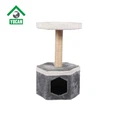
At our company, we offer a variety of wooden cat trees to meet different customer needs. Our Luxury Wooden Cat Tree is crafted from high - quality hardwoods and has a smooth, varnished finish. This not only enhances its aesthetic appeal but also reduces dust attraction.
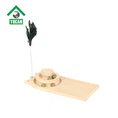
The Cute Wooden Cat Tree is designed with a more playful look, suitable for small spaces. It is made with a durable wood that is easy to clean.
For those looking for a more spacious option, our Wooden Cat Condo Tree provides multiple levels and compartments for cats to explore. The wood used in this product is treated to resist dust and wear.
Maintenance Tips
To minimize dust on your wooden cat tree, here are some practical tips:
- Regular Wiping: Use a soft, dry cloth to wipe the surface of the cat tree at least once a week. This can remove loose dust particles.
- Damp Wiping: For more stubborn dust, you can use a slightly damp cloth. Make sure to dry the wood thoroughly afterward to prevent damage.
- Vacuuming: Use a vacuum cleaner with a soft brush attachment to clean hard - to - reach areas, such as the crevices and corners of the cat tree.
- Keep the Environment Clean: Regularly clean the room where the cat tree is placed. This includes vacuuming the floors, dusting furniture, and changing air filters.
Conclusion
While wooden cat trees can attract some dust due to the nature of wood and environmental factors, proper selection of wood, finish, and regular maintenance can significantly reduce dust accumulation. Our range of wooden cat trees, including the Luxury Wooden Cat Tree, Cute Wooden Cat Tree, and Wooden Cat Condo Tree, are designed to balance functionality, aesthetics, and ease of cleaning.
If you are interested in purchasing our wooden cat trees or have any questions about dust management and our products, please feel free to contact us. We are more than happy to assist you in finding the perfect cat tree for your furry friend.
References
- "Wood Finishes and Their Impact on Dust Resistance" - Journal of Wood Science
- "Environmental Factors Affecting Indoor Dust Accumulation" - Indoor Air Quality Research Journal
- "Cat Behavior and Its Influence on Pet Product Hygiene" - Pet Health and Behavior Magazine