


Hey there, fellow pet lovers! As a supplier of pet hutches, I often get asked all sorts of questions about what animals can live in our products. One question that pops up more often than you'd think is, "Can a pet hutch be used for amphibians?" Well, let's dive right into this topic and find out.
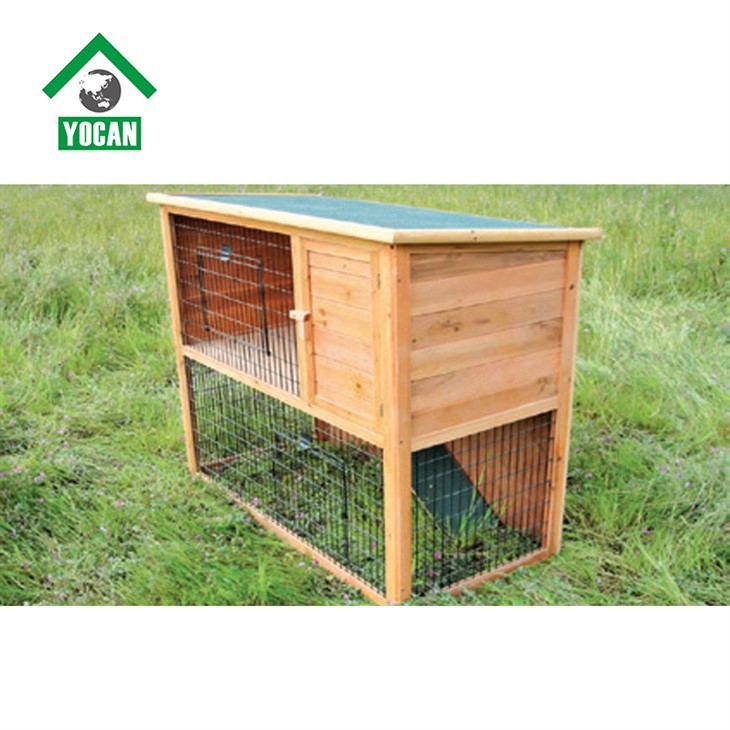
First off, let's talk about what a pet hutch is. A pet hutch is a type of enclosure that's usually designed for small mammals like rabbits or guinea pigs. It's typically made of wood or wire and has a sheltered area for the animal to sleep and a more open area for them to move around. For example, our 2 Stories Pet Hutch is a popular choice among small - mammal owners. It has two levels, giving the pets more space to explore and play.
Now, when it comes to amphibians, they have very different needs compared to small mammals. Amphibians are cold - blooded animals that need a specific environment to thrive. They require a habitat that can maintain a certain level of humidity, temperature, and lighting.
Humidity is a big deal for amphibians. Most amphibians have permeable skin, which means they can absorb water and oxygen through it. In the wild, they live in damp places like swamps, marshes, and rainforests. So, they need a high - humidity environment in captivity. A typical pet hutch, on the other hand, is designed to be well - ventilated to keep small mammals from getting too hot and stuffy. This ventilation can cause the humidity inside the hutch to drop quickly, which is not good for amphibians.
Temperature is another crucial factor. Amphibians are sensitive to temperature changes. They need a stable temperature range to keep their bodies functioning properly. Small - mammal hutches are usually placed in outdoor or indoor areas where the temperature can vary depending on the season and the location. For example, in the winter, a hutch outside might get too cold for an amphibian, and in the summer, it could get too hot. Amphibians often need a temperature - controlled environment, which a regular pet hutch may not provide.
Lighting also plays a role. Some amphibians need a specific light cycle to regulate their biological processes. They might need a combination of UVB light for vitamin D synthesis and regular light - dark cycles to mimic their natural environment. A pet hutch may not have the proper lighting setup for amphibians.
However, that doesn't mean it's completely impossible to use a pet hutch for amphibians. With some modifications, it might be possible to create a suitable environment.
If you're really set on using a pet hutch for amphibians, here are some things you can do. First, you'll need to seal the hutch to prevent moisture from escaping. You can use materials like plastic sheeting or silicone to seal the gaps in the wood or wire. This will help maintain a higher humidity level inside the hutch.
Next, you'll need to install a heating and cooling system. You can use a small heat lamp to provide warmth in the colder months and a small fan or air - conditioning unit to keep the hutch cool in the summer. Make sure to monitor the temperature regularly to ensure it stays within the appropriate range for your amphibian species.
For lighting, you can add a UVB light fixture and a timer to control the light - dark cycles. This will help your amphibian stay healthy and active.
You'll also need to create a suitable substrate for your amphibian. Amphibians need a substrate that can hold moisture and provide a comfortable surface for them to move around on. You can use materials like coconut fiber, sphagnum moss, or damp soil.
Another important thing to consider is the size of the hutch. Amphibians need enough space to move around, hunt, and hide. Make sure the hutch is large enough for your amphibian to live comfortably. A small hutch might cause stress and health problems for your pet.
It's also crucial to keep the hutch clean. Amphibians are sensitive to bacteria and parasites, so you'll need to clean the hutch regularly. Remove any uneaten food, feces, and dead plants from the hutch to prevent the growth of harmful organisms.
Now, let's talk about the types of amphibians that might be more suitable for a modified pet hutch. Some smaller species of frogs and salamanders might be a better fit. For example, tree frogs are relatively small and can adapt to a more confined space. They also don't require as much water as some other amphibians.
However, larger amphibians like bullfrogs or large salamanders may not be suitable for a pet hutch, even with modifications. They need a lot of space to swim and move around, and a hutch might not be able to provide that.
In conclusion, while it's possible to use a pet hutch for amphibians with some modifications, it's not the ideal solution. Amphibians have very specific needs, and a pet hutch is originally designed for small mammals. If you're serious about keeping amphibians, it might be better to invest in a proper amphibian terrarium or vivarium.
But if you're a DIY enthusiast and want to give it a try, our 2 Stories Pet Hutch could be a good starting point. It's a sturdy and well - built hutch that can be modified to suit your needs.
If you're interested in purchasing a pet hutch for your small mammals or thinking about modifying one for amphibians, we're here to help. We have a wide range of pet hutches available, and our team can provide you with advice on how to make the necessary modifications. Contact us to start a discussion about your pet - housing needs, and let's work together to create the perfect home for your furry or scaly friends.
References
- "Amphibian Husbandry: A Comprehensive Guide" by Herpetological Society Publications
- "Small Mammal Housing and Care" by Pet Owners Association Press