


Bat House
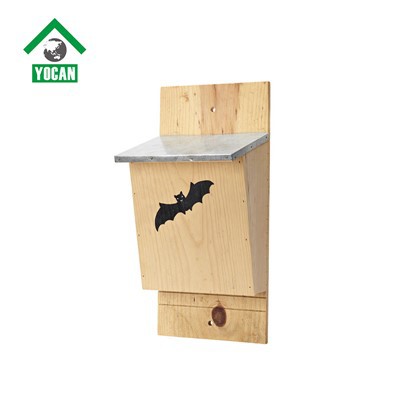
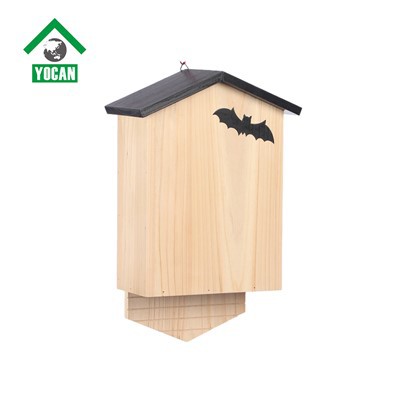
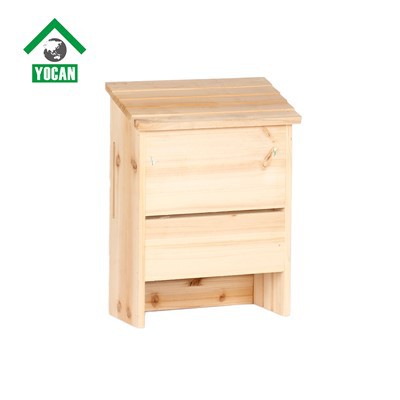
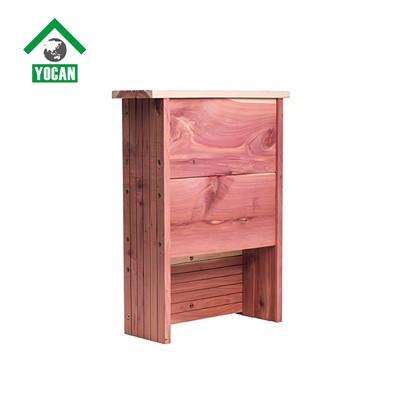
Bat houses give females a safe, warm place to raise their young. Since most female bats only have one pup each year, bat populations grow very slowly. Additionally, due to habitat loss and degradation, it is becoming harder for bats to locate natural roost sites to raise their young. By installing a bat house, you can provide mothers and their pups with a safe home.
Advantages of Bat House
Mosquito control
Sure, mosquitoes are insects and all, but this needs repeating. Bats may be the best form of natural mosquito control available. Many homeowners who had issues with mosquitoes on their properties have completed solved them by installing bat houses.
Pollinate plants
Bats are the original nighttime pollinators. While the bees handle the day shift, bats can actively help your garden grow in the evening. See, bats are nocturnal animals. They do the majority of their work during the evening.
Distribute seeds
Bats also distribute seeds after eating fruits and nectar. As the seeds are in their poop and the flying mammals often poop while in the air, the seeds end up in new areas. This helps spread plants to large, open areas that were once devoid of plant life.
Bat poop is popular
Surprisingly, bat poop is quite popular and important. Flying rodent poop, also known as guano, is an impressive source of fertilizer. With the absolute ideal ratio of nutrients for plant growth, many use guarno in their gardens as often as possible.




Why Choose Us
Our history
Zhejiang youqiang industrial co.,ltd was established in 2002 as a specialized manufacturer of pet products. Through years of efforts, our factory has 40,000 plus sq.M. Of standard factory buildings, new workshops for metal pet products and sales office in hangzhou.
Our product
Youqiang firmly believes that in order to gain a continuous development in the fierce competition of pet products, new products has to be developed. Until now we have developed a whole range of pet products, including over ten thousand item.
Our certificate
We have international certifications as iso9001 management system, fsc and bsci certication, passed the inspection by tuv, sgs, qcs, etc.
Production market
Main market in north america and europe, famous companies like petsmart,trixie, pets at home, fressnapf, costco etc.
Building a bat house is a great way to get involved in bat conservation and help these threatened animals. The style of your bat house depends on the tools, wood, and building materials you have available, as well as your skills and budget.
Since many bat species would typically roost under the bark of a dead tree, the goal is to make a bat house that mimics the narrow, rough space between the bark and trunk of a tree. Bats like tight spaces, so the inside of a bat house is very narrow. Additionally, bat houses are constructed using rough wood so the bats can hang on without slipping and falling. Bats also need warm places to raise their babies, which is why bat houses are painted dark colors and the sides are caulked to keep the heat in and water out.
Below are some key elements for a successful bat house:
A combination of exterior grade plywood and cedar is best. Do not use pressure-treated wood.
Bat houses should be at least 24 inches tall (with chambers being at least 20 inches tall), 14 or more inches wide, and open on the bottom to prevent buildup of guano. Multiple chambers should be ¾ - 2 inches apart. Taller and wider houses are better.
Add a vent to each side to allow air flow and prevent the bats from overheating. Vents should be about 6 inches from the bottom of houses that are 24 - 36 inches tall. For houses that are more than 36 inches tall, vents should be 10 - 12 inches from the bottom. The front vents should be as long as the house is wide. Side vents should be 6 inches tall by ½ inch wide.
Make sure the interior wood is roughened for the bats to cling to. Rough-cut wood will suffice, or surfaces can be grooved, roughened, or scored horizontally at ¼ - ½ inch intervals. Chamber surfaces can also be covered with a durable plastic, nylon, or fiberglass mesh, screening, or hardware cloth (⅛ - ¼ inch). Mesh can be stapled to the inside of the bat house every 2 inches (up, down, and across) so the mesh does not sag, buckle, or curl. Ensure the mesh hangs all the way down to the landing pad, and ensure that staple points do not protrude into the roost chambers. Metal mesh is not recommended as this material is abrasive and can be corrosive and conductive, which can cause injury to bats. Please note that if mesh is used, guano may collect requiring it to be gently hosed or cleaned out periodically.
It is crucial to caulk all seams using latex caulk, especially around the roof, to keep the bats warm and dry. Covering the roof with shingles, galvanized metal, or tar paper provides extra protection and will allow the bat house to last longer.
A 3 - 6 inch roughened landing pad extending from the bottom of a bat house below the entrance allows bats to land and climb up into the chamber(s).
Single-chamber bat houses are a great starter box, but bats seem to prefer larger structures which offer more stable temperatures. Bats will use both single- and multi-chambered houses, but houses with more chambers give bats opportunities to find warmer or cooler walls within the house as the weather changes and, therefore, improves the ability of the bats to regulate their internal temperatures. The bigger, the better.
Exterior grade (galvanized, coated, stainless, brass, etc.) screws, rather than nails, are recommended to increase longevity of the bat house.

With the improvement in bat house quality and knowledge of preferred mounting locations, the exact size and number of chambers have become less important. As long as bat needs are met, a wide variety of bat houses can be successful.
Single-chamber houses are often more vulnerable to temperature change compared to double- or triple-chamber houses. However, they can be successful when exposed to appropriate amounts of sun or shade, or when mounted on buildings that stabilize temperature. Taller houses offer a range of temperatures and are more likely to meet bat needs, regardless of the number of chambers.
Multiple bat houses of different colors or sun exposure often work well when placed in close proximity to one another. An early bat house study showed that people who provided two or more houses were twice as successful. Before purchasing a large bat house designed to shelter hundreds or thousands of bats, we recommend starting with multiple single-chamber houses of varied color or sun exposure to offer a variety of temperatures for bats to roost. By watching bat behavior on especially hot or cool days, you can easily evaluate what they need in your particular location.
In colder regions, bats have a strong preference for dark brown or black houses and they should be position to maximize solar heating. In hot climates, medium brown houses can still be attractive if they’re well-vented and have a metal roof to protect from the mid-day sun. Unless protected by a roof, lighter-brown (or equivalent) and well-vented houses are preferred.
Surrounding habitat
Ideally, bat-houses should be situated near good foraging and drinking habitat, such as streams, rivers, lakes or ponds. Bat-houses less than 400 m from a water source are ideal. However, it is still worth installing a bat-house in areas away from water, because bats may travel further to find drinking water each night. Open areas such as open fields, forest clearings, golf courses, green spaces or agricultural land are also appropriate areas to install bat-houses.
Mounting
Bat-houses can be successfully placed on poles or on the sides of buildings or outbuildings. Bat-houses mounted on poles are often the most successful, because they can be mounted high above the ground, face any direction, and be free of clutter. The ideal scenario for bat-boxes is to mount two multi-chambered bat-houses back-to-back on a pole, so that one faces north and the other faces south. Bat-houses mounted on wood, brick, or stone buildings with good solar exposure are also good choices because the building radiates heat into the bat-house during the evenings. Mounting a bat-house on a building is particularly effective for single-chambered bat-houses. Houses mounted on trees are more difficult for bats to find, and more vulnerable to predators. Avoid mounting bat-houses close to bright lights.
Obstacles
Bats like a clear path to fly out of their house so that they can detect predators and easily avoid obstacles. Bat-houses should be placed in open areas where there is no or little clutter for at least 5 m. If a bat-house is mounted on a tree, the branches should be de-limbed below and around the bat-house to create an open, uncluttered area.
Protection from predators
House cats are one of the largest predators of bats in b.C., although raptors, weasels, and other animals may attack bats. Mounting a bat-house high on a metal pole or building can minimize the risk of predation. A slippery sheet-metal guard can be wrapped on the bottom of a wooden post or tree to deter predators at these sites. To reduce predation by raptors, try to mount the bat-house at least 8 m from the nearest tree branches, wires or other potential perches for aerial predators.
Wasps
Wasp nests can be a problem for bats. Limiting the width of chambers to three quarters of an inch helps reduce occupation by wasps. During winter months when bats are absent (november to march), check the bat-house and remove any accumulated wasp nests.
Installation timing
A bat-house can be installed at any time of year. However, bats are more likely to move into a bat-house when they first return from their winter hibernation site to their maternity site in april or may. If the bat-house is being installed in combination with exclusion of bats from a building, install the bat-house at least two to six weeks before the actual eviction if possible.
Tips for Maintaining You Bat House
Airtight seams. Inspect the bat house interior using a spotlight. If bats are present, wait until later in the season to do routine maintenance. Once during each winter the bat house should be inspected carefully for broken seams. Daily heating and cooling can cause roof seams to separate after a few years. Daylight entering around the roof is a sure sign of needed repair, but be careful not to mistake broken seals with normal daylight entering through the side vents. If left in disrepair, bats may abandon or never utilize a cold roost. A ladder can be placed against a post-mounted bat house in order to apply fresh roof repair sealant over all seams. Check to make sure the roofing paper and landing screen is intact. In addition, is a good idea to re-stain or paint the bat house every few years to prolong its life.
Wasp nests. Paper wasps form gray honeycomb shaped nests on the ceiling of bat houses (an example of this nest can be seen in the upper left corner of the bat house on the cover of this booklet). These insects are not aggressive and happily coexist with bats. Unfortunately the nests become large and eventually consume real estate inside the bat house. Remove nests in the winter using a long, thin rod or stick only when bats are not present. Check carefully before cleaning because shadows can hide solitary bats in what first seems to be an empty box.
Yellow jacket/bald-faced hornets. These very aggressive insects build conical nests that can be as large as a volleyball. Some stealthy varieties also build nests inside the bat house. If a number of bees are routinely entering and exiting the bat house in the summer, chances are it is overrun with yellow jackets. Bats will abandon the bat house if these insects take up residence. Destroy these nests early before they become large. Carefully knock out nests at night or in winter when insects are less aggressive. A carefully directed spray application followed by a generous water rinsing may successfully kill the insects and minimize the chance of passing the poison to bats. People sensitive to bees should avoid this, as a single yellow jacket will sting multiple times.
Woodpeckers. These birds have rarely been observed drumming on bat houses. The damage can be repaired by filling holes with roofing sealant when bats are not present.
Shredded screen. If you purchased or built a bat house that incorporated low quality screen covering the interior partitions, it may be shredded over time. At worst, bats may be getting trapped under parts of the screen. It may be possibly to scratch the interior without taking apart the bat house, but it may be far easier to simply replace it with a modern design.
Bat inventory. Bats can be inventoried two ways. The most direct approach is to stand under the bat house and view the interior using a powerful spotlight (figure 14). This should be done very sparingly throughout the first season of occupation. A less intrusive technique is to watch the evening exit, which begins approximately 15 minutes after your local sunset and lasts about thirty minutes.
Overcrowding and overheating. If bats are constantly seen towards the bottom of the bat house throughout the season or are on the exterior, it may be too hot. This is best solved by installing a second bat house nearby or on the backside of the original. Alternately the bat house might need “tuned” to your specific location, perhaps by adding white roofing paper, repainting the box a lighter shade, or moving the box to a different location. Unless other roosts are already in use nearby, tuning a single bat house is experimental not recommended. Add a second box first then experiment later if necessary.
Warped baffles. The shell of the bat house should outlast the interior baffles. Over a period of time and usage, baffles may become warped. Bats will continue to use the box but capacity may be reduced. It will be difficult to directly inventory the bats. This generally is not an issue with modern bcm products as we use yellow pine plywood which is much more resistant to warping than inexpensive luan plywood.
Guano. Modern bat houses are thankfully self-cleaning. Droppings accumulate on the ground directly under the bat house. This material naturally biodegrades and there is not much need to remove it.
Overheating or downed bats. Generally it is had to overheat a bat roost, but it can happen. Bats seen flying during daytime hours do not constitute a health hazard. Bats may occasionally be visible during daylight hours because of an unusual disturbance. This includes but certainly is not limited to burning leaves, loud lawn mowers, chainsaws, children, or cats. Bats may also appear simply to get a drink.
A single chamber bat house mounted on a pole. Data shows bats slightly prefer larger structures which offer a wider range of stable temperatures, but don't take this to mean a single chamber bat house won't attract bats. A tightly built single chamber bat house may do excellent especially when attached to a building, benefiting from the more stable mass of the building. Larger colonies/large bat houses are often better on poles in their own space.
Factory smooth interior crevices. All interior wood must be roughened for bats to readily cling to. Some commercial bat houses staple screening to the inside of the box which may eventually fall off as condensation and urine rust the staples. Cheap screening will shred and baby bats have been found dead apparently trapped within it. A "bat house" seen for sale at a major hardware store has only one groove on the "landing plate"; this is totally unacceptable. All bcm bat houses feature surfaces severely roughened in random directions, better than systematic grooves by machine and no screen is needed.
Unprotected roof. Roofs without shingles may last only a few seasons, once the roof is compromised the box will be incapable of retaining heat and fall into disuse. Bat conservation and management uses plastic lumber made from recycled material as roofs on most of our bat houses; this material easily outlasts any shingle and never needs painting.
Nailed together with unsealed seams. This type of bat house is usually the very low end costing in the $10-$30 range. It might get a few bats but will soon will warp and separate at the seams; allowing unwanted ventilation, and will fall into disuse. All bcm bat houses are screwed together and glued together during assembly; some have seamless plastic exteriors which eliminates these fail points.
Unpainted, unprotected exterior. Some manufacturers insist on leaving bat boxes unpainted. While in certain regions the natural wood color may be a perfectly suitable color, there is no good reason for the structure to go unprotected. While cedar is rot resistant, it will warp and separate the seams just as much as any other wood material, although the thicker the boards, the longer it will last. So, we suggest all bat houses have some sort of preservative applied to the exterior, even if it is a clear finish.

Our Factory
Zhejiang Youqiang Industrial Co.,Ltd was established in 2002 as a specialized manufacturer of pet Products. Through years of efforts, our factory has 40,000 plus sq.m. of standard factory buildings, new workshops for metal pet products and sales office in Hangzhou. Our factory is located in the maintain area of Pan'an County, Zhejiang Province, adjacent to Hangzhou City, close to Ningbo Port.


FAQ
We're well-known as one of the leading bat house manufacturers and suppliers in China. Our factory offers high quality bat house made in China with competitive price. Welcome to place an order.