

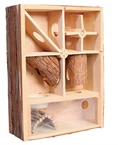
Guinea Pig House
Guinea pig house, a secure space that's large enough for them to exercise and high enough to stand up fully on their back legs. A large exercise area and secure shelter where they can rest, feel safe and protected from predators and extremes of weather and temperature.Your guinea pigs need as much space as possible so that they can relax and be able to roam, explore and forage, just like they would in the wild. Your guinea pigs’ housing should be permanently attached to a larger space within which they can exercise freely at any point in the day or night. This can be a safe guinea pig-proofed room indoors or a large run outdoors.
Advantages of Guinea Pig House
Increased interaction
Housing your guinea pigs inside your home allows for more frequent interactions, ensuring they become a much-loved part of the family.
Health and comfort
Being indoors means your guinea pigs are in a warm, comfortable environment, which is conducive to their well-being.
Early detection of health issues: It’s easier to notice any health problems early, thanks to the closer proximity and increased interaction.
Enhanced friendliness
Frequent interaction with humans can help guinea pigs become more friendly and accustomed to handling, making them tamer and more approachable.
Easier maintenance
Managing your guinea pigs’ health and hygiene and cleaning their enclosure tends to be more straightforward and convenient when you house them indoors.


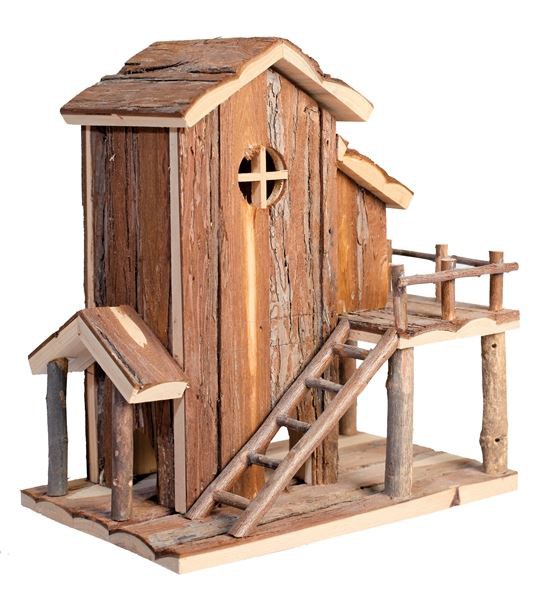
Wooden guinea pig houses are a popular choice for pet owners who want to provide a natural and comfortable place for their furry friends to live in. These cages are made from high-quality wood and are designed to provide a cozy and secure environment for your hamster.
One of the biggest advantages of a wooden guinea pig house is the natural look and feel it provides. The wood gives the cage a warm and inviting appearance that is reminiscent of your guinea pig's natural habitat in the wild. This can provide a sense of comfort for your pet and help reduce stress.
Wooden guinea pig houses are also easy to clean and maintain. They are designed with removable trays and easy-to-open doors that make it simple to access the cage for cleaning and feeding. Plus, the wood material is less prone to scratches and wear than other types of cages, making it more durable and long-lasting.
Another benefit of wooden guinea pig houses is their versatility. There are many different sizes and shapes available, so you can choose the perfect cage for your pet's needs. Additionally, many cages come with built-in toys and other features to keep your pet entertained and active.
Why Choose Us
Our history
Zhejiang youqiang industrial co.,ltd was established in 2002 as a specialized manufacturer of pet products. Through years of efforts, our factory has 40,000 plus sq.M. Of standard factory buildings, new workshops for metal pet products and sales office in hangzhou.
Our product
Youqiang firmly believes that in order to gain a continuous development in the fierce competition of pet products, new products has to be developed. Until now we have developed a whole range of pet products, including over ten thousand item.
Our certificate
We have international certifications as iso9001 management system, fsc and bsci certication, passed the inspection by tuv, sgs, qcs, etc.
Production market
Main market in north america and europe, famous companies like petsmart,trixie, pets at home, fressnapf, costco etc.
leece liners
Fleece liners are a type of safe, soft, cosy and eco-friendly bedding for guinea pigs. Multi-layered and ultra absorbent, these clever liners are designed to wick moisture away into the lower layers, keeping piggies dry and comfy at all times. Conveniently, fleece liners are also machine washable and easy to sweep for spot cleaning in between washes. They come in a variety of colours and patterns and, as you can tell from the below picture, guinea pigs love to cuddle in them!
Wood shavings
Wood shavings are a popular bedding option for guinea pigs but despite their popularity, it’s important to know that some wood shavings simply aren’t safe to use. As we’ve already mentioned, fine dust can cause piggies to develop dangerous respiratory infections so you must always use shavings that have been dust extracted and kiln dried.
Paper bedding
Paper bedding is becoming increasingly popular but since it comes in so many forms and gets processed in many different ways, it can be difficult to ensure that you're buying the safest quality paper bedding for your piggies.
Some companies use reclaimed and waste paper, which is better for the environment than making paper solely for the manufacturing of bedding. However, some waste paper can contain inks, dyes and chemicals that could cause harm to guinea pigs. If you opt for paper bedding, ensure that it's free from nasty toxins and chemicals.
Litter pellets
Litter pellets are constructed from hard paper or wood pulp. Pellets are very absorbent and soak up moisture but, when dry, can be very tough on your piggy’s delicate paws and can sometimes cause inflammation.
Pellets that are suitable for guinea pigs can be hard to find and it’s also worth knowing that this type of bedding can work out as being more expensive than other bedding types.
6 Things You Should Add to Your Guinea Pig’s Cage to Make Them Happy
Carefresh or similar paper substrate fleece
On the bottom of any cage, there needs to be a material that catches the urine and feces of a guinea pig, while also being biodegradable. Guinea pigs are simple creatures that love little things like shredded paper.
These small critters can eat and chew the carefresh or paper substrate fleece without feeling any negative effects since it is completely safe. This makes them happy by providing them with something to do and they can consume it without hurting their stomachs.
Paper bags and hiding places
Technically, you can purchase a small bag and tape it to the inside of the cage, but it is more fun to make one. Fold the paper into the shape of a bag that can hold your guinea pig, based on their size and weight.
Your furry companion will have lots of fun jumping in and out of their new hiding place. This is a creative idea for people who like to do crafts and have the time to make the small accessories for the cage.
It is important that you only use paper! Guinea pigs like to chew on everything and if you use materials like metal or plastic, they can hurt their teeth or accidentally ingest it.
Tunnels
Adding tunnels is a great addition to your guinea pig habitat. In the wild, these animals make their own tunnels by digging. The tunnels should be large enough to just fit your guinea pig, they may not like it if it is too big. Tunnels need to feel tight.
Fresh vegetables
Guinea pigs love fresh vegetables! These large nibbling animals enjoy fresh foods and will love you for putting it in their cages. Just be careful when adding vegetables. Try and slice them up into smaller chunks. For example, instead of providing your guinea pig with a large carrot, use baby carrots.
Also, vegetables can rot in your guinea pig’s cage. If you notice that they don’t like a specific type of food, eliminate it quickly. This way, you don’t attract bugs and bacteria that can harm your guinea pig.
A diy maze
Did you know that guinea pigs love mazes and are extremely active? They love to zoom around, and when happy they’ll “popcorn”. That’s guinea pig language for “cute little jumps in the air”. You can create a mini-diy maze using household materials. Your pet will thank you for it!
A great way to start this project is to find paper towel rolls and combine them together with safe to eat tape. Try not to use glue as your furry friends will probably chew on their maze.
You can also purchase a maze from a store and attach it to your guinea pig’s cage to expand it. The larger it is, the more room your furry friend has to run around and stretch their legs. These lovable pets like having something to do and with a maze strengthen their mind and physical bodies.
Grass chew ball treats
Who doesn’t love treats? Guinea pigs have sensitive stomachs and should only be fed a strict diet to ensure that they don’t have any digestive problems. This doesn’t mean treats are off the table, though! There are special grass chew ball treats made with ingredients high in fiber.
One of your guinea pig’s favorite things to do is chew! They like to eat and nibble on things to sharpen their teeth. These chew ball treats not only taste delicious and stimulate their senses but are also safe to consume! You should limit the treats though to ensure that they maintain a proper diet and remain healthy.
The importance of space
The first keyword to consider when choosing a guinea pig cage is ‘space’. Guinea pigs are active creatures that require plenty of room to run around and play. A cramped cage can lead to stress and obesity in your pet, which can result in serious health issues.
Airflow matters
Another critical factor when choosing a guinea pig’s cage is ‘airflow’. Good ventilation is essential for maintaining your pet’s health as it prevents the buildup of ammonia from urine and reduces the risk of respiratory problems.
Cages with wire bars allow for excellent airflow but ensure that the gaps between bars are not too wide that your pet could get stuck or escape. Aquariums or terrariums may seem like good options due to their easy clean features; however, they provide poor ventilation and are not recommended for housing guinea pigs. The same is true of clear perspex panels for c&c cages, which are sold by some retailers. These solid panels do not allow for good airflow throughout the cage.
Easy clean features
Keeping your guinea pig’s cage clean is essential for their health and wellbeing. Therefore, the keyword ‘easy clean’ is vital when choosing a cage. A dirty cage can lead to bacterial growth, unpleasant smells, and can make your pet sick.
Look for cages with removable trays or those made from easy-to-clean materials like plastic. Some cages even have built-in litter boxes that can be easily removed and cleaned. Avoid cages with lots of small crevices where waste can accumulate.
Accessibility
The last keyword to consider is ‘accessible’. Your guinea pig’s cage should be easy for you to access for cleaning, feeding, and interacting on a daily basis.
Cages with large doors or tops that open fully are ideal as they allow you to reach all areas of the cage easily. This will make it easier for you to clean the cage thoroughly and ensure that no areas are missed.
Remember that guinea pigs are prey animals and may feel threatened if you approach them from above. Therefore, a cage with a door at the side might be less stressful for your pet.
Housing for guinea pigs
Guinea pigs really give so much to our lives, from their cute ‘popcorn’ jumps, to their cosy cuddles. The list goes on, which is why you should give them plenty of space for to live in.
That said, guinea pigs aren’t really best for small living. And although a small home or apartment would work fine, a larger home is usually more ideal for these compact creatures.
What makes a good hutch?
Definitely a covered section that will make them feel safe and protected, especially while they sleep. Their hutch should also be lined with soft grass or hay – but not straw, sawdust or wood shavings. These are more likely to cause respiratory problems.
When choosing a spot for their hutch, you’ll want to consider extreme weather conditions. For example, indoor hutches shouldn’t be placed in direct sunlight or a poorly-ventilated area, especially during hot summer months. Outdoor hutches should also be well-protected from intense sunlight and other elements, and be elevated to protect them from potential predators; which sometimes can include your other pets.
Want to know something interesting?
Daily exercise is a healthy move for your guinea pig. So if your guinea pig lives inside, from time to time and when it's safe, you could let them out of their pen and into a safe, enclosed room. (of course, you’ll want to ensure all the doors are shut and electrical cables are off the floor.)
If they generally live outside, you’ll want to build a sturdy, fenced enclosure around their hutch, allowing them to feel a little dirt between their toes. This barricade, however, should also protect your guinea pig from predators, while preventing escape by burrowing or jumping. Inside the fencing, add some hollow logs, pipes, shrubbery or rocky caves, to give ythem both cover and protection.

Remove your pets
The first thing that you will need to do when performing a top-to-bottom cleaning is to remove your pets and place them into a temporary enclosure. If you have a helper, this is a great time to let your pet get supervised free-roaming time.
Remove the accessories
Once the pets are safely out of the way, you will need to remove the accessories, including the furniture, food bowls, water bottle, hides, hay racks, etc.
Wash the accessories
We recommend washing your accessories in this step before continuing with the habitat because it will take them a while to dry. Moisture can easily get trapped in bedding, which might enable mold to grow.
Dump the bedding
While the accessories are air drying, you can dump the used bedding into the trash or compost pile if you have one. Guinea pig bedding makes great compost, and if you enjoy gardening, you should look into making a compost pile if you don’t already have one.
Wash the cage
Once the cage is empty, you will need to wash it well with hot soapy water. We’ve found that taking it outside works the best, but you can also use the tub if it’s cold or the weather is bad. We recommend a stiff bristle brush and dishwashing liquid to help remove caked-on debris.
Dry the cage
With the cage completely clean, you will need to allow it to dry completely. Paper towels can help speed up the process, but we recommend letting the habitat sit until all moisture has had a chance to evaporate.
Add fresh bedding
Once the cage is completely dry, you can begin to reverse the steps and add fresh bedding.
Replace the accessories
With the bedding in place, you can begin to replace the accessories, which should all be completely dry by now. Refill the water bottle and place fresh food in the food bowl.
Return your pet to the cage
The final step is to return your guinea pig to its home and watch as it explores with excitement.
Our Factory
Zhejiang Youqiang Industrial Co.,Ltd was established in 2002 as a specialized manufacturer of pet Products. Through years of efforts, our factory has 40,000 plus sq.m. of standard factory buildings, new workshops for metal pet products and sales office in Hangzhou. Our factory is located in the maintain area of Pan'an County, Zhejiang Province, adjacent to Hangzhou City, close to Ningbo Port.


FAQ
We're well-known as one of the leading guinea pig house manufacturers and suppliers in China. Our factory offers high quality guinea pig house made in China with competitive price. Welcome to place an order.
hamster assembled toys, hamster security products, hamster protein snacks